Exploring the Importance of Community-Centric Produce Markets
A deeper look at Food Recovery Network's Title 1 Elementary School Produce Distribution initiative
Community-centric produce markets are a lifeline, asked for and created by the community. It is critical infrastructure that doesn’t have to be huge to be a lifeline; it doesn’t have to be a million pounds a week, but it has to be available in dignity, respect, and fun, inviting people to take what they need.
Food Recovery Network supports communities by investing in and implementing community programs that expand the ability of community members to have consistent access to the food they deserve. We work with community partners who are deeply invested in supporting the community’s needs, and FRN works to strengthen that resolve by infusing our resources of capital, people power, experience, and literally tons of surplus fresh produce.
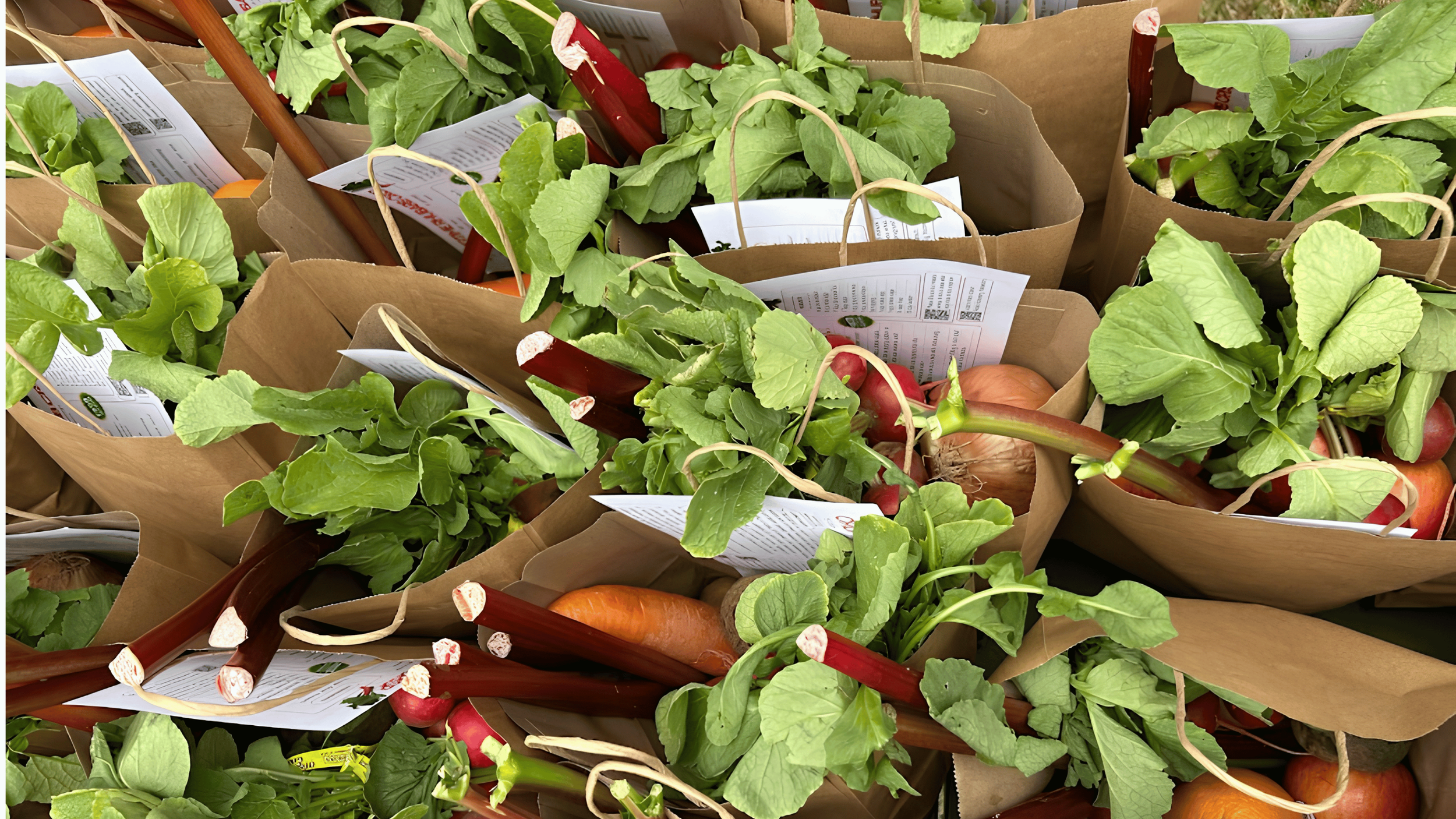
Our Title 1 Elementary School Produce Distribution initiative successfully incorporates all of these elements, thanks to the many partnerships we develop along the way.
Beginning With Understanding
Understanding the intricacies of local markets is crucial to ensure people most affected by food insecurity have access to food. We organize the intricacies of our local markets to work for the people most affected, providing them with access to food in ways that save them time, save them money, and integrate into the realities of their day-to-day lives, thereby fortifying them. Understanding these intricacies is crucial in the ongoing efforts to improve our food system so it benefits all of us.
At FRN, we believe that everyone deserves food. We design our food distribution programs collectively with the communities we serve, with the understanding that the landscape will fluctuate and change. Food access and distribution, components of our food system, are ever-changing due to the fluctuating prices of food. Securing and maintaining locations for food distribution that best meet the needs of individuals affected by food insecurity, surplus crop availability, and so on are all considerations to meet the needs of our neighbors. The realities of these fluctuations have been felt by even the most financially insulated among us as prices continue to increase.
Disinvestment and Extraction
Before I address how FRN works in concert with communities to deepen access to food, I want to explain what I mean when I reference community disinvestment, or community extraction. What do I mean by these terms? There is a plethora of scholarship on these very topics that I encourage everyone to explore at their own pace. Communities are disinvested in and extracted upon through policies at the federal, state, and local government levels. This extraction and disinvestment is enforced by these policies (policies make up the systems in which we live), and informally, they are enforced by our history of racism, sexism, and hierarchy in the United States. I have been studying these topics for over 20 years, and I have been living within them my entire life, as have all of us.
To sharpen your focus on this history, which continually transports us to our present, is not something that can be accomplished in a weekend. So whether this is new learning for you, or you feel you are well-seasoned on the topics, these concepts are not to overwhelm, but to provide an open heart to the realities that many communities experience every day. It is upon us all to continue learning about the forces that prevent some of our communities, both within our urban areas, suburbs, and rural communities, from thriving. And when we understand the systems working to disinvest and extract, we all can then provide the respect due to these communities for their tireless, generational efforts to overcome. And many more of us still can contribute to their efforts.
There is a lot to process. There is so much to learn. There are so many inspiring stories. I welcome all of you to share resources you have as well.
The scholarship available to us contains research on tax policies and community zoning laws, the birth of the suburbs, and urban renewal, which ensures some school districts do not receive the same level of investment per student as other school districts. Why do we short-shrift some students—children— and invest in others? There is a documented history that examines how businesses come into certain areas and neighborhoods and stay, or into certain areas and leave, and along with them auxiliary businesses such as grocery stores, shops, and banks that support a thriving community. There is ample research on the biased practices that persist to this day on who gets business loans, or mortgages, emergency funding, and an extension of credit—on who gets opportunity and who is deemed valuable or reliable.
Disinvestment and extraction, together, create an impact on a community that can be observed by anyone who walks, bikes, trains, or drives through any city. There might be some really great small storefronts trying desperately to meet rent and attract passersby. Whole communities might lack informal access to health care (and what I mean by that is the community members may or may not have insurance, they may or may not be able to afford to go to a doctor, even if there is health insurance).
Residents know their strengths and hardships best. They are not merely victims of their circumstances but are actively calling for improvements and solutions. Food Recovery Network is working to provide human capital in the form of volunteerism and programming to pour in where needed and wanted to increase the quality of life for communities across the U.S.
The Potential for Thriving Communities
It’s important to approach conversations about disinvestment and extraction with a sense of hope and agency.1
Yes, many neighborhoods face substantial challenges, but they also have rich histories and thriving communities. The goal is to acknowledge the beauty and resilience of these areas while also advocating for the resources and support they deserve and want—resources, which, for various reasons, have been taken away or withheld. In cities like Chicago, despite some neighborhoods being mischaracterized, there exists a vibrant community with pride and hopeful aspirations for improvement. Our focus should be on enhancing these environments and addressing systemic inequities that have long persisted.
Our markets serve as a vital resource for the community, and starting from this foundation can lead to even greater opportunities. A free market allows families to keep more money in their pockets each week, which can be directed toward other necessities. Markets provide some financial relief and also foster a sense of care for one another’s well-being.
The future of community-centric produce markets lies in understanding the specific needs of different locales and addressing the disproportionate impacts of disinvestment. By fostering a connection between farmers and local communities, we can cultivate better access to fresh produce and a deeper sense of power-building and agency for residents. We can provide an offering to our neighbors, to have, to take what they need.
You can get involved in this effort to support communities by reading and sharing our content, supporting our work financially, and introducing us to investors who can help move this work forward. Together, we can all continue to be part of foundational avenues of community development, ensuring that the voices of the community lead the way in shaping their present moment and their futures. As we move forward, it’s vital to engage with communities and listen to their insights. Together, we can build a food system that nourishes and uplifts, ensuring that everyone has the chance to thrive.
Watch this conversation with two of our partners in Atlanta for a bit more insight into the importance of community collaboration in increasing critical access to nutritious food.
Increasing Fresh Produce for Elementary School Families. Click below.
And remember, let me know what you think, and share your resources with us!
For your bookshelf to widen your aperture of knowledge:
FRN’s STORYGRAPH OWNED BOOKSHELF
Race for Profit: How banks and the Real Estate Industry Undermined Black Home Ownership by Keeanga-Yamahtta Taylor
Off the Books: The Underground Economy of the Urban Poor by Sudhir Venkatesh
Evicted by Matthew Desmond
More references for a deeper dive:
There is ample data that shows Black and BIPOC owned businesses did not receive nearly the rate of PPP Loans as white businesses. Here is one short article.
…and an article in VOX.
And here is more information about the current rates of black unemployment.
Read - “Imagining An Ideal Town: A Vision for Food Access and Community Connection”