How to Start Your Chapter In 3 Steps
Katie Aguila, Director of Programs
As a part of FRN’s team for more than 7 years, I’ve met so many incredible college students who are passionate, creative, and searching for ways to make a meaningful difference on their campus. They come to FRN after learning about food waste and hunger and how they impact our communities, and they’re ready to be a part of the solution. The only question left is…how?
FRN helps students join the movement to fight waste and feed people by starting an FRN chapter to recover and distribute surplus food on their campus and in their wider community.
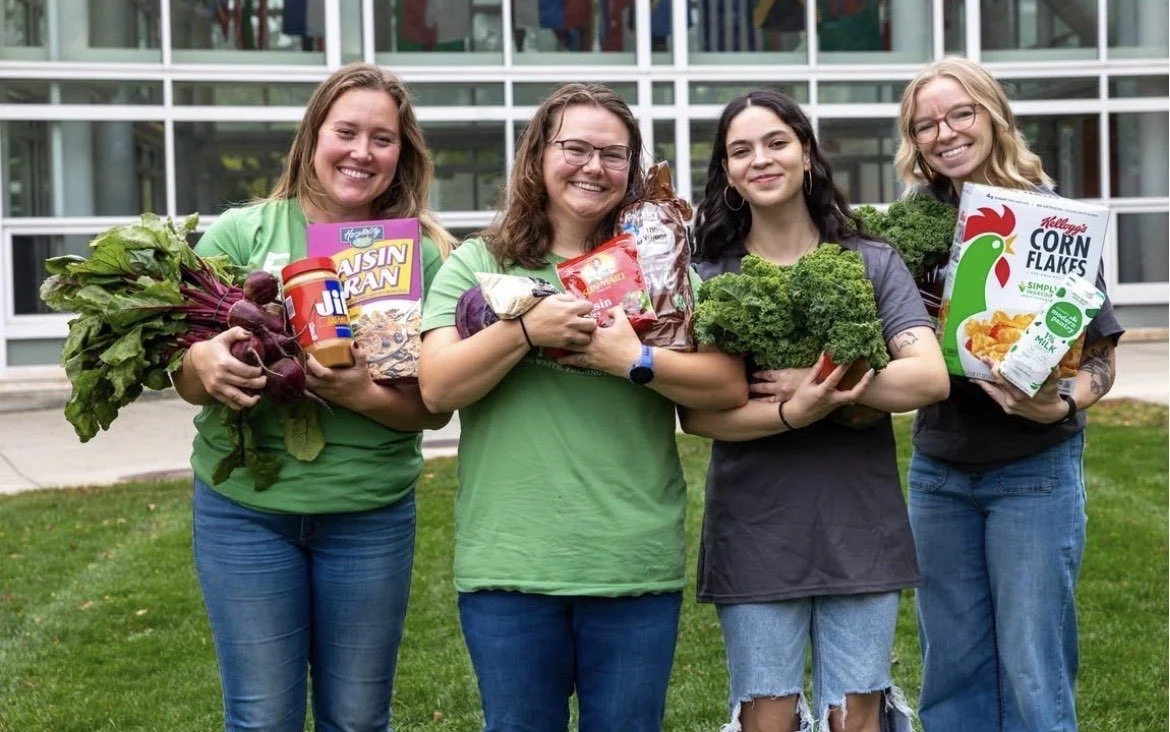
Keene State College Chapter
There are only 3 steps to starting a chapter –
Build a team of 3 student leaders
Find a faculty or staff advisor to support
Choose a chapter path - food recovery, advocacy and education, or volunteer service
Then you’re ready to turn in your new chapter application and officially join FRN!
While we’ve made it simple to start a chapter, we know getting started on actually building a food recovery program with your chapter can feel daunting, even when you’re bursting with energy to do it. The problems of food waste and hunger are so huge and overwhelming, and they can leave any of us feeling like there’s no way that one person can begin to tackle this.
After attending student-led conferences, tabling at colleges and universities to help students learn how they can join FRN, and hundreds of calls with students guiding them through how to start a food recovery program, we realized that we needed a different resource to help students get started – something to demystify the process of starting a chapter and break it down into tangible steps.
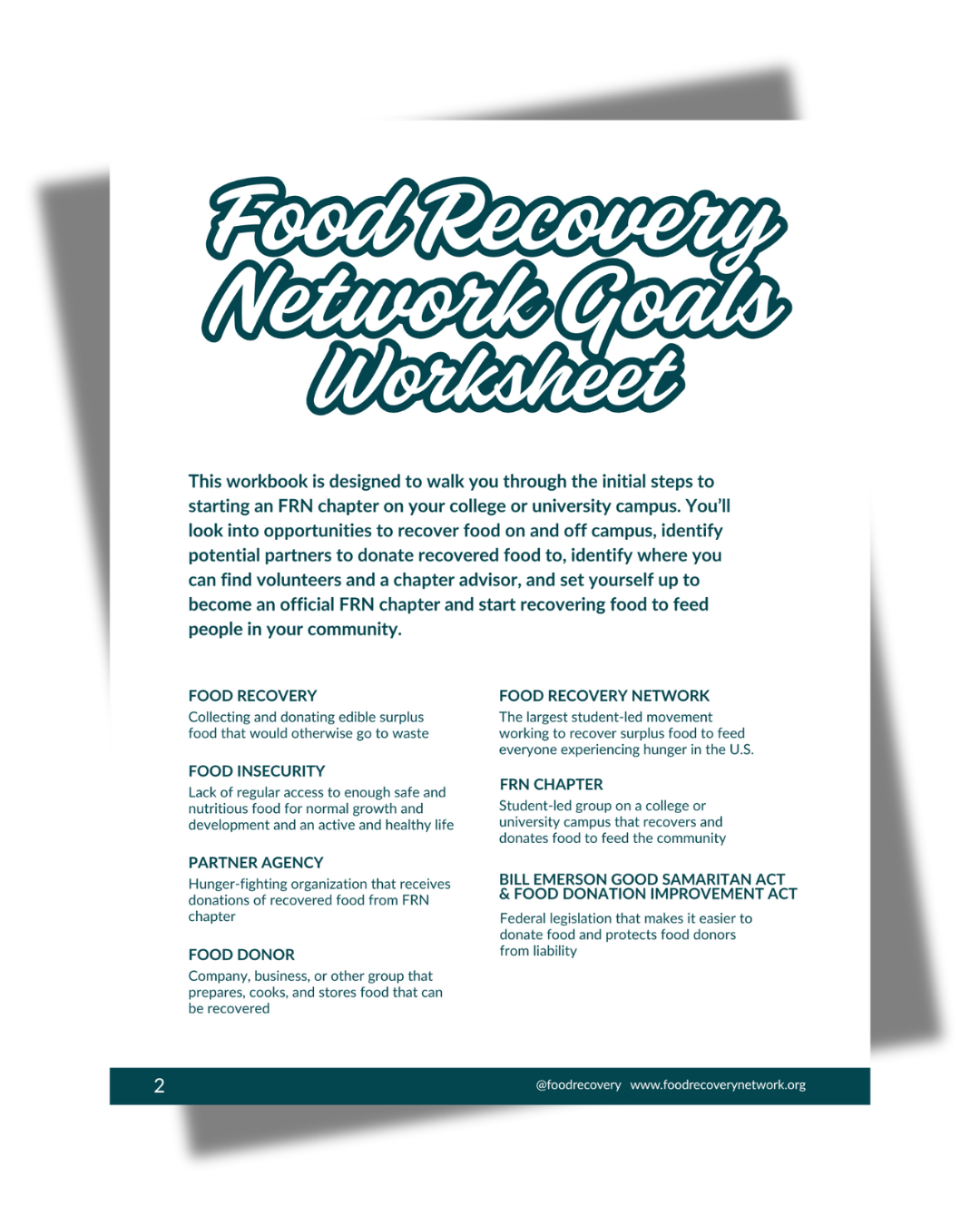
Enter our new how to build a chapter workbook. It takes some of the top questions and roadblocks that we get from students and helps you walk through each of them so you can start recovering food and feeding people in your community. In the workbook, you’ll look into opportunities to recover food on and off campus, identify potential partners to donate recovered food to, identify where you can find volunteers and a chapter advisor, and set yourself up to become an official FRN chapter and start recovering food.
Remember, you don’t need to have answers to all of these questions before turning in your new chapter application. We’re here to help figure out these together! But if you’re feeling stuck on how to bring food recovery to your campus, this workbook is for you.
Here’s a sneak peak of some of the biggest questions students bring to us when they’re getting started, and how our new workbook can help you answer them:
It’s just me – how do I find more people to build a chapter with?
We’ll help you brainstorm different events or spaces you can join and host to find your leadership team, chapter advisor, and volunteers – things like other campus clubs, student org fairs, and sustainability or student engagement programs.
I’m not sure what my campus or community needs when it comes to food recovery. What should I do?
First, we’ll help you think about food recovery in a larger context so you can build a program that makes sense for you and your community. You’ll take a look at what barriers there are to food access in your area, how your campus supports students facing food insecurity, and other factors that will help you figure out what kind of food recovery activities to do.
Where do I find food to recover?
First, we’ll have you take a look at what’s already going on on your campus. Do you have dining halls, cafes, franchised dining spots? Then look at what kind of food places are off campus but nearby – like grocery stores, cafes, and farmers markets. What’s the food like at these different places? Your chapter can recover prepackaged snacks, prepared meals, fruits and veggies, and more.
Where should I bring recovered food?
Start by looking into what hunger-fighting work is already being done on your campus and in the wider community. Does your school already operate a food pantry or free fridge? What other groups run food distribution programs that you can tap into?
From there, you can look at the logistics of recovering food to help you determine which partner is right for you. You’ll walk through volunteer needs, transportation options, and supplies needed.
I hope this helps inspire you to take the next step to building your FRN chapter, and there’s so much more packed into the workbook to help you get started. Questions, or want to chat more?
Email us anytime at programs@foodrecoverynetwork.org.
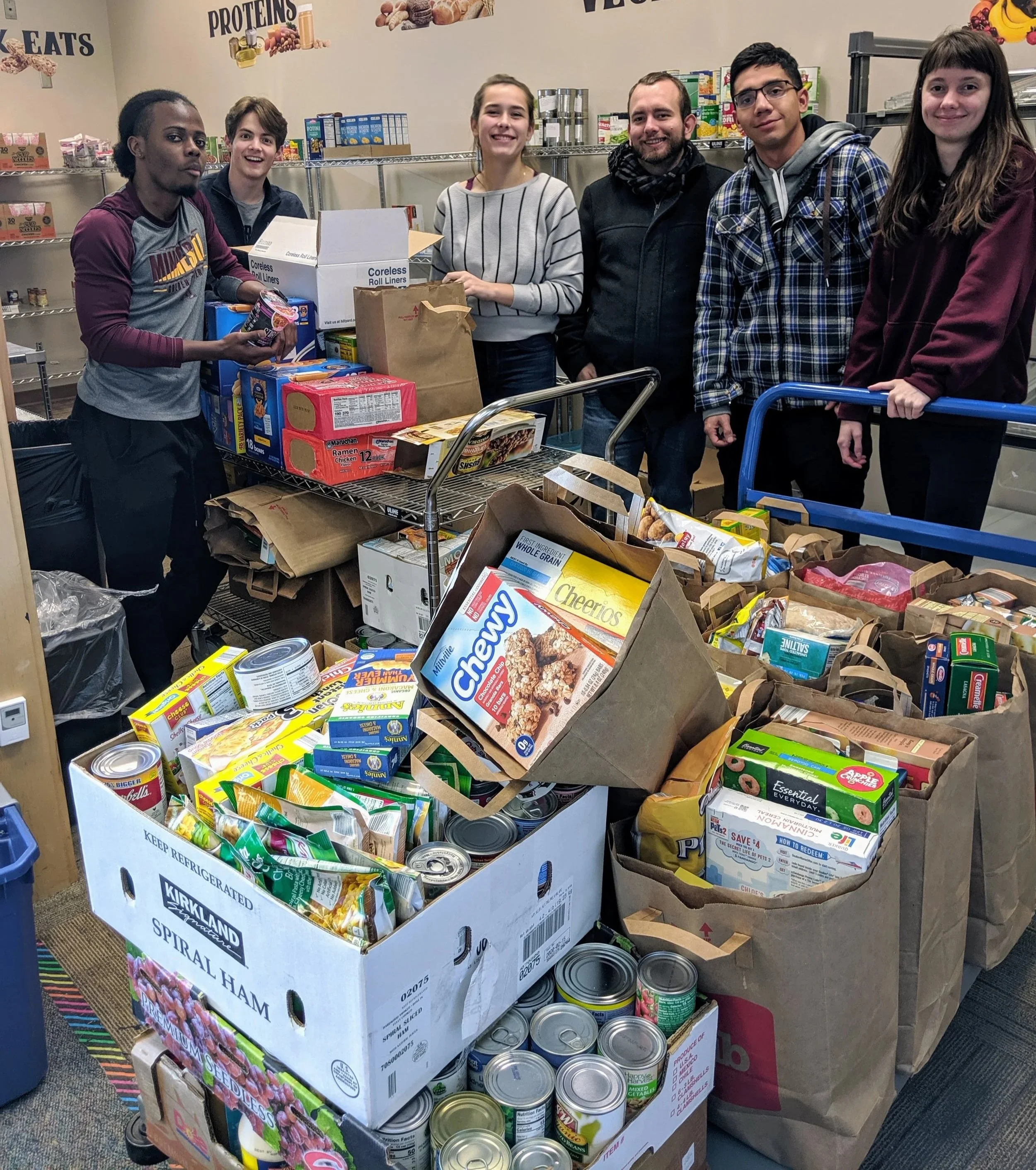
The Central Lakes College Chapter provides food for their on-campus food shelf.