A Collective County-by-County Responsibility. Municipal leaders can make a systemic, long-lasting difference.
Hunger is not an issue of charity. It is an issue of justice. -Jacques Diouf
We must also assume collective ownership for this human right. - Priya Fielding-Singh, PhD and author of “How the Other Half Eats.”
Of the 3,144 counties within the United States, in only 29 of them do the households make above a living wage. The people living in those counties represent roughly 1.6% of the total population. For the rest of us, yes, we may live in areas where some of us make a living wage, but for many more, generations of striving to get by, and today’s rapidly changing economic landscape means we find ourselves in a precarious and chronically precarious financial situation. Inflation is on the rise, gas prices fluctuate unpredictably, higher education and safe childcare remain unimaginable for many families, and what was once a comfortable living for some now feels uncertain. With constant economic shifts and chronic economic hardship, financial security can often be more fragile than it seems, and certainly more fragile than is discussed collectively.
Collectively, we are all putting in the WORK, but the problem is suppressed wages that make only 1.9% of the population live in areas where everyone is making above a living wage. We PRODUCE A LOT that makes a few people a lot of money, and that’s called the productivity pay gap.
Many individuals, including GenZ, who were told they could look forward to a stable future, are now grappling with the reality of sliding into financial insecurity despite their best efforts of playing by the rules and work very, very hard. Interestingly, even as economic conditions change, and often change not to our collective benefit, our eating habits often remain rooted in past comforts and security. While we are all seeing food prices increase, ironically, families are spending more of their budget on food—not just to account for the increase in food, but on top of that increase, our scarcity mindset has us buying more food, and probably more than we can consume. People accustomed to financial stability may continue to exhibit behaviors typical of that lifestyle, such as wasting food or neglecting leftovers.
This isn’t necessarily a reflection of irresponsibility; rather, it’s an indicator of a mindset that doesn’t prioritize resourcefulness in times of uncertainty or inconsistent hardship. However, that doesn’t mean all households engage in such practices. Many families, regardless of their financial status, actively minimize waste, showcasing a commitment to sustainability and respect for resources.
What if we all shifted our collective approach to value the food we have?
We can all strive to honor the value of food, treating it with dignity regardless of our economic circumstances. Imagine a society where everyone is conscious of their food consumption and waste. By making a concerted effort to use food fully, intentionally, and as often as we can—whether by repurposing leftovers, being mindful of portion sizes, sharing meals together, and finally, composting scraps—we can foster a culture of respect for the resources we have and those who may not be as fortunate. Food packaging and, therefore, packaging waste may be out of our immediate control, but deciding to consume our own perfectly good food is in our control.
This idea of “food with dignity” resonates with a broader theme of collective responsibility. When we all engage in thoughtful consumption, we normalize the practice of preserving food as a means of respecting our resources and, in turn, those who may be in need. It acts as a unifying factor, much like wearing seatbelts¹ in a car or ensuring that, no matter the make or model, everyone participates in the same safety practice.
Similarly, we can all commit to minimizing food waste, recognizing the intrinsic value of food.
Moreover, this shift in perception could help dissolve the stigma surrounding food assistance programs. There exists skepticism about who deserves help, particularly aimed at people who may appear financially stable at first glance. Considering that only 29 counties have households making above a living wage, while financially stable households live in all zip codes, the markers of who is doing well financially are impossible to tell.
It’s essential to shift the focus from questioning the needs of individuals to challenging the systems that perpetuate poverty, inequity, and chronic financial struggle. Imagine 3,144 counties, and all of the communities therein, where everyone, regardless of their financial status, collaborates to reduce food waste and assumes everyone around them deserves access to food. Food Recovery Network’s business and event services do just that - we’ll consult to help municipalities, counties, and businesses across the country implement food recovery plans as part of their sustainability initiatives, as a supplement to their human services and hunger relief efforts.
Together, we can cultivate a culture of mindfulness, awareness, and respect—enhancing our dignity as individuals while supporting people who may be struggling. This communal approach encourages kindness and understanding rather than suspicion and judgment.
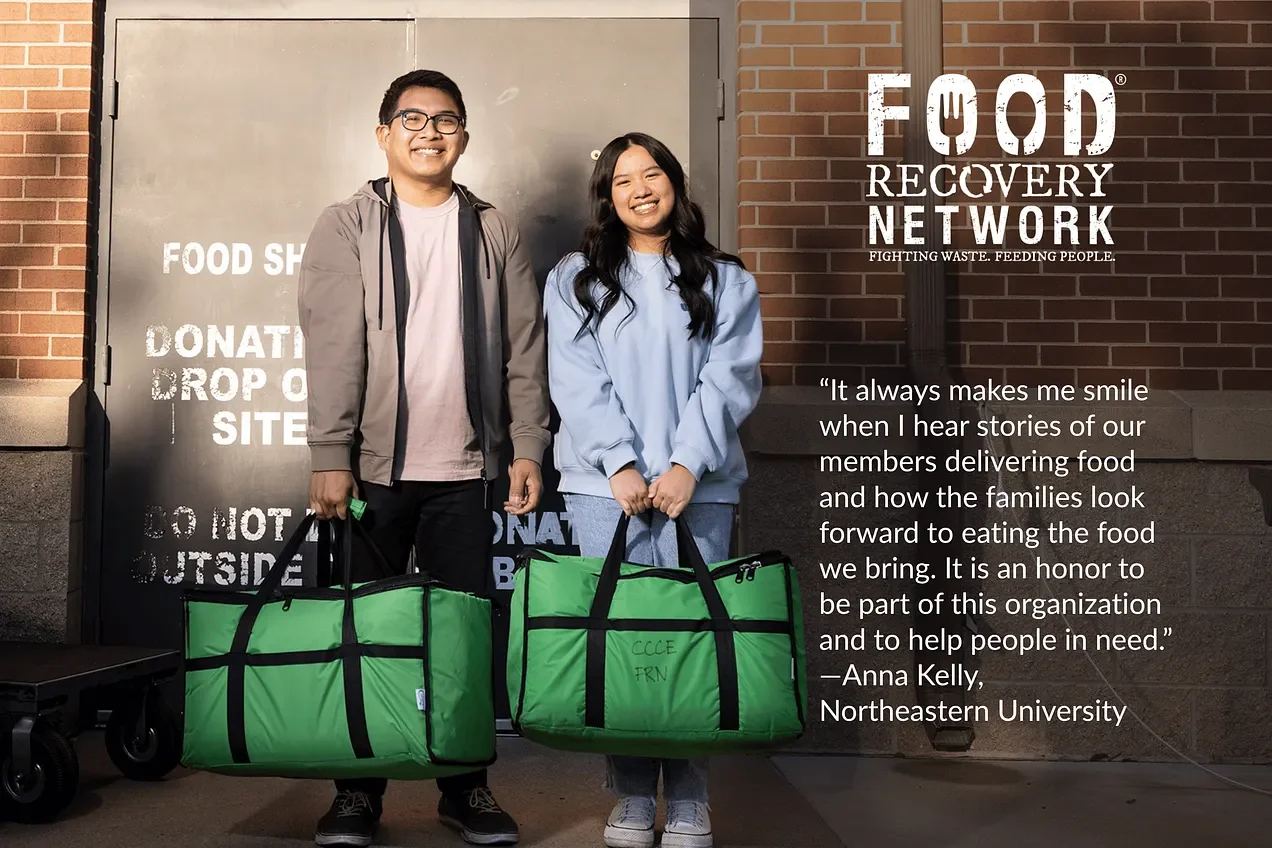
As we navigate this complex economic landscape, let’s embrace the small yet impactful changes we can make that are in our control. By honoring our food, respecting its value, and fostering an inclusive community, we can contribute to a more compassionate society while ensuring that no one goes hungry. We could reduce the 47 million neighbors who are currently experiencing food insecurity and hunger to zero neighbors experiencing food insecurity and hunger. Collectively, we have the power to turn our actions into a force for good, transforming both our relationship with food and our community’s attitude toward those in need.
Together, let’s advocate for a United States, county by county, where everyone deserves food with dignity, and where we work collectively to create a secure future for all.
1 Is there a safety measure we take that we all do, not for our personal benefit, but first for the benefit of others? Is there something we do, universally, and have developed as a habit to help OTHERS?