Recently published news and opinions from Food Recovery Network

Regina Harmon Regina Harmon

October Roundtable talk: When we invest in people, we surpass our goals

During our October Roundtable Talk, a recurring theme emerged, woven into each of the goals we achieved this past year and stitched into the larger goal we unfurled for this upcoming program year: when we invest in the people within our movement, we surpass our goals. I invite you to read the update below and follow along by listening to our recorded conversation.

During our October Roundtable Talk, a recurring theme emerged, woven into each of the goals we achieved this past year and stitched into the larger goal we unfurled for this upcoming program year: when we invest in the people within our movement, we surpass our goals. I invite you to read the update below and follow along by listening to our recorded conversation.

We have seen the investment in our FRN national staff and in our incredible student leaders support the larger movement year after year after year. In fact, since the launch of our strategic framework, FRN10X, our network of student leaders and food system partners has doubled within that time. Where we were once a network of 4,000 people, we have grown to a network of more than 8,000 people. FRN’s network of student leaders and alums is multi-generational, and when we committed our resources like staff time, large-scale recovery opportunities, and monetary support for chapters to further strengthen relationships, we have seen our chapters recover more precious food for local communities.

Our commitment to our network goes hand in hand with the diversification of recovery across the food system. Our chapters and food system partners can mobilize on farm fields, large-scale events, college dining halls, restaurants, grocery stores, and more. Each community where we have a presence has different needs. We know to ensure that consistent food access means we must diversify where we recover food.

During the recorded conversation, you will hear the progress made toward our goals from our program year that just concluded on June 30th. Spoiler, yet again, because of the investment in our people, and because of the diversification of food recovery, we surpassed our goals. You will also hear about the new mountain top for Food Recovery Network for this program year and the focus we intend to apply to our work. With FRN10X as our guide, we get clearer and clearer as to how we can achieve recovering surplus food to feed everyone who is hungry in the U.S. Each year we apply our learning and we make meaning from what our data is telling us.

Through analyzing our data, something important has taken shape that demands our attention and our focus in order to keep the momentum of the movement strong: Student chapters provide consistent food access, but community markets provide a surge of available produce needed to meet the need at key times of the year.

What does this mean? Our student leaders continue to be a vital resource to their communities to provide food access. We always say, our students provide meals one carload of food at a time. They recover food at all hours of the day when many of us have other time demands. They are there to package up and deliver pans of food to homeless shelters and churches. They have worked with their partner agencies for years. They are the constant source, and I am personally in awe of and forever grateful to them.

Second, our data shows that our community produce markets are designed with the growing season of those locations in mind ensuring precious surplus produce has a home with community members. We can increase access to food by donating thousands and thousands of pounds of produce, and ensure large volumes of food aren’t tilled back underground or brought to landfills.

What does this mean for the work ahead? We are striving to grow our network from 8,000 members to 40,000! I ask each of you reading this to talk about the Food Recovery Network with your peers, friends, neighbors, colleagues, and anyone else to whom you can share an inspiring message. By having conversations about FRN’s work, we can normalize food recovery and reduce the waste of perfectly good food.

 For the current program year, our specific goal is to expand FRN’s programming coverage from 60% to 80% of our target areas and to recover 1 million pounds of surplus food from across the supply chain. Our mapping discussion provides more details about where our target areas are and the data supporting our choices. When we achieve this goal, we will be able to feed more people, more quickly.

If you would like to support our work for this program year (and beyond) and are in a place to make a financial contribution to Food Recovery Network, your gift would be most welcomed and immediately put to critical use. Thank you for considering. 

And for all of you who are part of our 8,000 strong, thank you, thank you for all you have done for FRN and for all that you continue to d

Read More
Food Recovery Network Food Recovery Network

Agrlilinks Call to Action: The Intersection of Food Waste and Food Justice

This past summer Food Recovery Network partnered with Baltimore City Schools to distribute fresh produce to area communities.

Originally posted on AGRILINKS 9.19.2024

As the Executive Director of Food Recovery Network (FRN), I have dedicated the past nine years to addressing the critical issues of food waste and food insecurity. It has been a journey that has brought me to a point of clear focus: we need to take action to bring about systemic change in our approach to food production, consumption, and distribution. And the time to make that change is now, and it has been now for a while.

When I became the Executive Director for FRN in 2015, I was driven by the belief that through the power of college students, we could make a tangible difference in the fight against food waste and hunger. Our model at FRN is simple yet impactful. We mobilize students to recover surplus food from college dining halls and surrounding businesses, safely package it, and donate it to hunger-fighting nonprofit partner agencies. This grassroots approach has allowed us to redirect millions of pounds of food from landfills to the plates of those experiencing food insecurity.

And our work goes beyond the college campus. There is surplus food all around us. We support large-scale events, corporations, and advocacy initiatives to create comprehensive food recovery plans and advocate for systemic changes. Our goal is not just to recover food but to take action to help address the root causes of food insecurity and reduce CO2 emissions to tip the balance on climate change.

It can be easy to be overwhelmed by the big numbers—47 million people in the US are hungry right now. And the large-scale nature of our current climate crisis can seem insurmountable and immeasurable. But there are simple and accessible things every person can do to take action and join the movement to reduce food waste. We can take a collective deep breath to ground and strengthen ourselves. Then, we must focus on small things we can do together to create a larger change.

1. Make a decision to talk to the person who just brought you your food

“Does your restaurant have a food recovery plan in place? No? Do you know why? Oh, maybe your manager might want to talk to me about it.” Just beginning these wonderful, curious questions can begin to change the issue. You do not need to be an expert; you just need to be curious.

2. Advocate for legislation to change the root causes of systemic food waste

Currently, advocates are working to get senators to sign on in support of the Food Date Labeling Act. Standardizing date labels is estimated to have a net benefit of $3.55B annually, mostly for consumers. It will also immediately prevent millions of tons of perfectly good food from going to landfills unnecessarily. Copy the letter we provide on FRN’s website and send it to your legislators.

3. Find out if your alma mater, current college, or college closest to you has a FRN chapter

Put FRN in touch with the sustainability department or connect us with your favorite professor to speak with their class about FRN.

4. Connect FRN with large-scale event planners or corporations

If you are planning a large-scale event or your corporation can benefit from hearing directly from our FRN team - reach out and let us know.

I am encouraged by the growing momentum behind the food justice movement. And our work is far from over. There are still millions of individuals and families who lack consistent access to nutritious food. Together, we must continue to raise awareness, advocate for policy changes, and grow the power of communities to take ownership of their food security.


I invite you to join us in this crucial work. Whether you are a student, a professional, or an advocate, there are numerous ways to get involved in the fight against food waste and food insecurity. Together, we can create a future where every person has access to an abundance of delicious food and our food systems are sustainable, equitable, and just.

Regina Harmon,
Executive Director, Food Recovery Network

Read More
Food Recovery Network Food Recovery Network

Food Bank News Op-Ed: How to Address Sky-High Gen Z Hunger Rates

Unfortunately, as the current wave of Gen Z individuals reaches adulthood and becomes eligible to apply for SNAP on their own, college students experience unfortunate obstacles in accessing SNAP benefits, impeding their ability to succeed. 

We have the power to make changes to reduce these barriers and end hunger. 
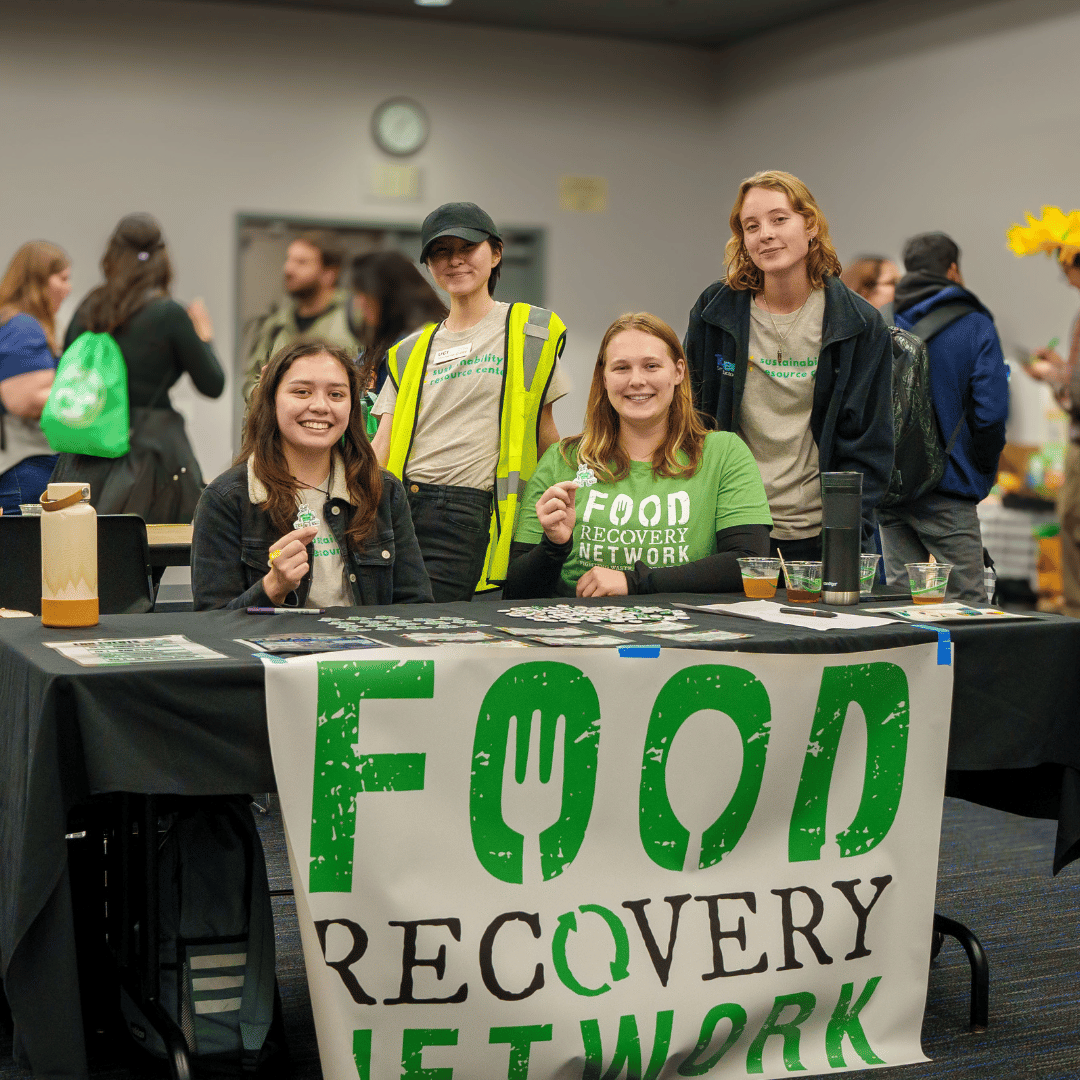
Gen Z college students stand on Capitol Hill during the Congressional Hunger Center’s and Food Systems Collaborative’s 2024 Gen Z Food & Hunger Summit.

From September 9, 2024 publication, Food Bank News

GUEST OPINION BY REGINA HARMON OF FOOD RECOVERY NETWORK and LUCY SHANKER OF FOOD SYSTEMS COLLABORATIVE — The prevalence of hunger among Generation Z demands action. According to a May 2024 report from Purdue University, 36% of Gen Z households had to draw from savings or borrow money to purchase food in the last 12 months, and 29% of Gen Z households experienced food insecurity in the previous 30 days, far higher than the rate for other generations (see chart). Furthermore, a July 2024 report from the Government Accountability Office (GAO) report highlighted that approximately 4 million college students in the U.S. lacked access to sufficient food in 2020. 

Without intervention, this problem will continue to grow. By 2030, Gen Z is projected to become the predominant demographic in all regions, with the highest documented rate of food insecurity compared to any generation in recent history. Our collective action can ensure that no individual, especially college students and Gen Z, has to endure the challenges of food insecurity. 

In addition to advocating for measures that increase long-term financial stability, such as raising the minimum wage, which is directly connected to the federal work-study hourly rate, or canceling student debt, we can help make an immediate impact on college students by increasing access to nutritious foods. 

For individuals facing food insecurity, the Supplemental Nutrition Assistance Program (SNAP) is a crucial avenue for obtaining nutritious food. This government program, formerly known as food stamps, provides electronic benefits to low-income households, which can be used to purchase food. 

Unfortunately, as the current wave of Gen Z individuals reaches adulthood and becomes eligible to apply for SNAP on their own, college students experience unfortunate obstacles in accessing SNAP benefits, impeding their ability to succeed. 

We have the power to make changes to reduce these barriers and end hunger. 

Educating students about SNAP is essential. Many students aren’t even aware of the program’s name, let alone that SNAP exists in the first place. Without this foundational knowledge, students don’t know where to begin to apply. Research shows that 59% of eligible college students don’t utilize this benefit. 

Colleges and universities can take action by incorporating SNAP education into their financial aid application processes and student orientations. Student Affairs departments can develop external partnerships with local hunger relief organizations or human service agencies and invite them to participate in student activity fairs to help educate their student body about SNAP and other benefits. 

Another crucial step is simplifying the application process. Complex procedures often deter individuals from applying for benefits. Colleges and universities can facilitate access to SNAP by training financial aid counselors to assist students with the application process. As students apply for financial aid, offering SNAP application assistance in tandem is a great place to start. Additionally, student health centers can incorporate eligibility screenings to gauge food security and offer referrals to community partners for application assistance. 

Finally, encouraging students to advocate for themselves is tantamount to change. For example, the current federal work requirements for full-time college students create significant barriers to SNAP eligibility. Adjusting these work requirements could increase SNAP access and reduce hunger among college students, but it necessitates political action. 

Approximately 41 million members of Gen Z, including 8 million first-time voters, will be eligible to participate in this year’s elections. If Gen Z advocates for themselves and exercises their political power, this huge voting bloc presents a real opportunity to drive tangible progress toward making access to SNAP easier for college students. Their actions could ensure SNAP funding is not cut, remove barriers to the application process, and increase eligibility for college students—all leading to end food insecurity. 

Any person of any age can contact elected officials on behalf of Gen Z. Find out who they are here. Get used to calling them. Elected officials have staff whose job it is to take your calls and listen. Food Systems Collaborative and Food Recovery Network work to make the process easy and often have calls to action when legislation is up for review, and emails and calls are urgently needed. 

Sign and write petitions for legislation that address the issues outlined above, such as this one. A petition with an influx of signers can have increased weight with congressional members. Websites like Change.org let the petition creators pull the number of signers from each city and state to educate legislators on how connected the petition is to their local constituency. 

Find opportunities to advocate in real life, like the recently hosted Gen Z Food & Hunger Summit. These are crucial opportunities to show up in person to amplify a cause. Stay current with future opportunities by following Food Systems Collaborative. And finally, students can take immediate action to alleviate hunger in their college communities by getting involved with Food Recovery Network, founding a chapter or joining one on their current campus. 

These actions matter. Landmark progress can come from youth advocacy. Together, with focus, we can begin to end food insecurity for an entire generation. – Regina Harmon and Lucy Shanker

Regina Harmon is the Executive Director of Food Recovery Network. Lucy Shanker is the communications lead at Food Systems Collaborative. 

PHOTO, TOP: Gen Z college students stand on Capitol Hill during the Congressional Hunger Center’s and Food Systems Collaborative’s 2024 Gen Z Food & Hunger Summit.

Read More
Food Recovery Network Food Recovery Network

FRN Update: Community Colleges Driving New Changes for Food Recovery Network

As Food Recovery Network (FRN) continues to focus on recovering delicious food to feed everyone experiencing hunger in the US—they are proud to announce the expansion of FRN’s presence in community colleges.

Community Colleges Driving New Changes for Food Recovery Network

New Grant Supports Installation of 5 New FRN Chapters at Community Colleges nationwide

As Food Recovery Network (FRN) continues to focus on recovering delicious food to feed everyone experiencing hunger in the US—we are proud to announce the expansion of FRN’s presence in community colleges. FRN’s Community College Recovery Grants have been awarded to five stand-out Community Colleges across the nation:

  • Central Lakes College (Brainerd, MN)

  • Green River College (Auburn, WA)

  • Montgomery County Community College (Blue Bell, PA)

  • San Diego College of Continuing Education (San Diego, CA)

  • State Board for Community Colleges and Occupational Education and Community College of Aurora (Aurora, CO)

Community College Recovery Grants provide the technical and financial assistance to design and implement food recovery programs to ensure these local communities can address their specific needs.

“Our data analysis revealed that it is more often two-year community colleges, rather than four-year universities, that exist in communities with greater food access and food waste disparities across the U.S. These five new chapters will lead the way as FRN continues to implement our data-driven strategic framework that aims to feed more people, faster,” says Regina Harmon Executive Director, FRN.

For almost 15 years, FRN has been utilizing community power to reduce food waste through our network of nearly 200 college and university student-led chapters, along with business and community partnerships. FRN's data-driven strategic framework, FRN10X, helped recover more food in one year than in the previous 10 years combined and distribute 329% more meals than in 2019. Just last year alone, our network contributed 27,690 volunteer hours, the equivalent dollar value of $905,892.00 (Independent Sector), to enrich communities across the U.S.

Media inquiries contact Sarah Corbin, Director of Communications. sarah.corbin@foodrecoverynetwork.org.

###

Regina Harmon, Executive Director of Food Recovery Network since 2015, has been a pivotal voice in raising awareness and harnessing action to reduce food waste, end hunger, and positively impact the environment. Regina has been invited to share her insights with media outlets such as CNN and Al-Jazeera and featured in publications such as SELF. In addition to her role at Food Recovery Network, Regina serves on the board of directors for Food Tank and Earth Island Institute and is a valued member of ReFED’s Advisory Council.

Food Recovery Network (FRN) is a national nonprofit that mobilizes 6,000 college students, food providers, and local businesses in the fight against climate change and hunger by recovering perishable food across the supply chain that would otherwise go to waste and donating it to organizations that feed people experiencing hunger. As one of the largest student-driven movements against food waste and hunger, FRN’s programs are on nearly 200 college campuses and 100 food businesses in 46 states and D.C., and they have recovered more than 16.5 million pounds of food to date – the equivalent of 13.8 million meals donated to feed individuals experiencing hunger and 9,300 metric tons of CO2 emissions prevented from entering our atmosphere.

Read More
Food Recovery Network Food Recovery Network

In the News: Plan to Reduce Food Waste This Back-to-School Season

School is back in session, but food waste is not. Check out the USDA's new food waste infographic for tips on how you can cut food waste this back-to-school season and beyond.

News provided by

U.S. Food and Drug Administration

Aug 29, 2024, 10:00 ET

SILVER SPRING, Md., Aug. 29, 2024 /PRNewswire/ -- This back-to-school season is a great time to start thinking about how you and your family can reduce food waste. Being mindful of food waste will not only protect the environment, but it will also help you save money by only buying what you need.

Tips to reduce food waste.

The U.S. Food and Drug Administration (FDA) is committed to a national goal of reducing food waste by 50 percent by the year 2030. Whether you're packing a school lunch for yourself or a family member, eating a cafeteria lunch, or a college student eating in a dining hall, FDA has tips to reduce your contribution to food waste.

Packing a Lunch

  • Check the fridge to see what needs to be used before going to the grocery store. Pack leftovers or use ingredients that may go bad in a few days to avoid throwing them away. Remember that most foods can also be kept in the freezer until you are ready to eat them.

  • Before grocery shopping, plan a grocery list that includes school lunches so you don't purchase more food than you'll eat before it expires. Be careful when buying bulk food options to check the shelf life so that you can eat them before they go bad.

  • If packing lunch for a child or family member, give them options to choose from to get them more interested in their food.

Eating in a Cafeteria or Dining Hall

  • Before purchasing a meal, take a moment to think about how hungry you are. This will help you avoid throwing away uneaten food by buying exactly what you need to feel satisfied.

  • Share unopened snacks with friends or pack them to eat later if you don't think you are hungry enough. Consider food allergies before sharing an unopened snack with a friend.

  • If you're a college student, research whether your university has a food pantry or chapter of the Food Recovery Network. These organizations help reduce food waste by taking food donations from cafeterias, students, and faculties for those experiencing food insecurity.

By making these small daily changes this back-to-school season, you can help FDA reduce the nation's food waste by 50 percent by 2030. Learn more tips about how you can reduce food waste by visiting:

Read More